The Annual Report Template Nobody Builds (But Everyone Needs)

Every year, the same thing happens in businesses across Australia.
Someone senior decides it's time to start the annual report. The team looks at last year's version. Someone suggested starting fresh because the old one was "a bit of a mess." A designer gets briefed. There's a debate about the cover. Meanwhile, the content team is collecting data, chasing approvals, and trying to hit a deadline that was probably set optimistically in a calendar meeting in November.
It's stressful, it's expensive, and a lot of that stress is structural. Not because annual reports are inherently difficult, but because most businesses treat them as a design project rather than a production process.
The Annual Report Is a Production Problem
Roughly 70 per cent of the content is the same every year. The structure is the same. The financial tables are the same tables with new numbers. The chairman's letter sits in the same place. The director profiles follow the same format. The legislative compliance sections cover the same legislative requirements.
If you treat the annual report as a from-scratch design project every year, you're reinventing a substantial amount of structure that didn't need to be reinvented. And you're handing that reinvention problem to whichever designer happens to be available, who will solve it their own way - which may or may not be consistent with last year.
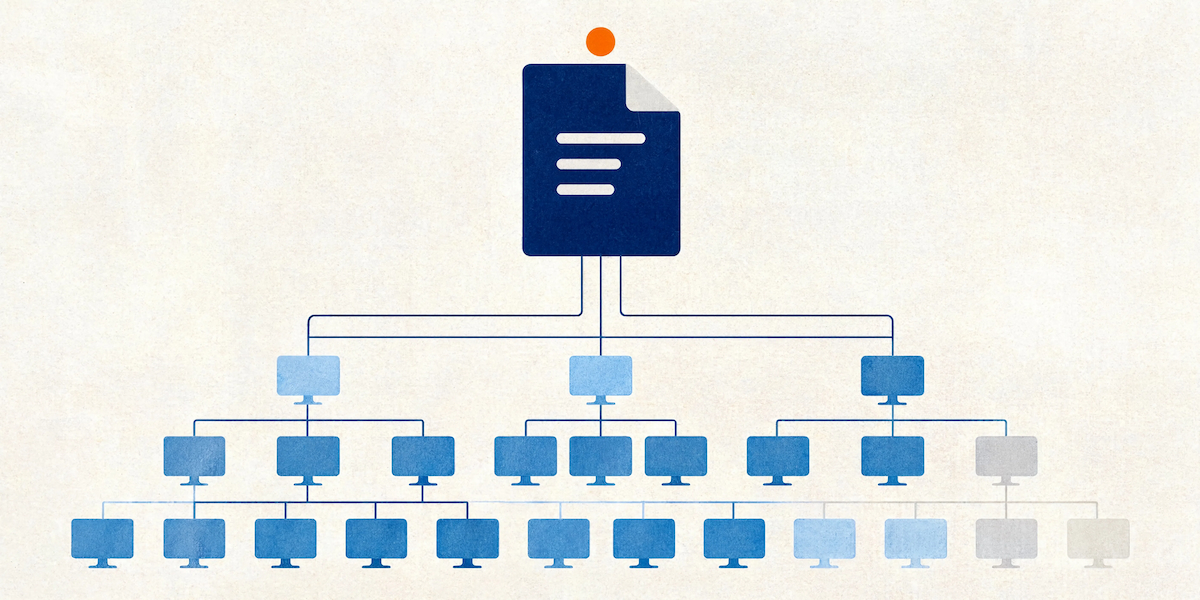
A properly built annual report template changes that dynamic entirely. Instead of starting from a blank canvas or last year's messy file, you start from a properly structured master template that has the right architecture already in place. The designer's job is filling it with this year's content, not rebuilding the structure from scratch.
What a Proper Annual Report Template Actually Includes
This is where most businesses' templates fall short. The "template" is often last year's PDF turned into a Word file, with some placeholder text swapped in. You just deleted the content. The template is still missing.
A proper annual report template has several things that last year's document probably doesn't.
A clean heading and style hierarchy. Annual reports are long documents with multiple section levels, and if the heading styles aren't properly defined, reformatting becomes a manual process every time something changes. Proper heading styles mean that the table of contents updates automatically, section numbering stays consistent, and the designer isn't spending half their time fixing formatting that broke when someone pasted in text from an email.
Automated table of contents and section numbering. These should never be manual in a long document. An automated table of contents that updates with a single click saves hours across the production process, and it eliminates the embarrassing error of a table of contents that doesn't match the actual page numbers.
Financial table templates. This is the one that causes the most pain in annual report production. Financial tables have strict formatting requirements, they're updated late in the process, and they're usually the most error-prone section. A properly built financial table template - with the right column widths, consistent number formatting, and properly defined row styles - makes it possible to update figures without reformatting everything.
Running headers and footers with variables. The report title, the financial year, the business name. These should be defined once and flow through the document automatically, not manually typed into every header. Variables mean a single update changes every instance.
Section architecture that accommodates variation. Annual reports grow and shrink. Some years there's a new sustainability section. Some years a section is dropped. A well-built template makes it straightforward to add or remove sections without the rest of the document breaking.
The Brand Consistency Argument
Beyond the production efficiency case, there's a brand consistency argument for annual report templates that tends to resonate with marketing and communications directors.
The annual report is often the most widely distributed, most carefully read document a business produces. It goes to shareholders, regulators, institutional investors, and anyone researching the business seriously. It's the document that people form impressions from.
If that document is inconsistently formatted - if the typography varies between sections because different people worked on different parts, if the colour usage drifts from the brand guidelines - those inconsistencies are noticed. Maybe not consciously. But the overall impression of a document that doesn't quite hang together is different from the impression of one that is polished and coherent throughout.
A properly built template enforces brand consistency by design. The person updating the financial tables can't accidentally change the body text font to something off-brand, because the style is defined and applied. The new staff member writing the director profiles can't use the wrong heading level, because the template guides them to the right one.
Building the Template Once, Using It for Years
This is the commercial case that makes the investment decision straightforward.
A properly built annual report template is not a one-year project. It's an asset that improves every year, as the production team becomes familiar with it and as minor refinements are made after each production cycle. The design agency doesn't need to be briefed from scratch every year. The production timeline tightens. The number of revision rounds decreases.
Most businesses that invest in a proper annual report template recover the cost in the first production cycle - through reduced design hours, fewer revision rounds, and a faster path from first draft to final sign-off.
The ones that don't have one keep paying the cost every year, in overtime, in designer fees, and in the quiet frustration of a process that feels harder than it should.
A Note on AI and Annual Reports
Businesses are increasingly looking at whether AI tools like Copilot can assist with annual report production: drafting narrative sections, summarising data, pulling in content from internal sources.
For that to work well, the document structure needs to be coherent. Copilot in Word works with Word-native styles. It applies structure based on the heading hierarchy it finds. If the annual report template has a clean, properly defined style structure, AI-assisted drafting and editing will behave predictably. If the template is built on manual formatting and ad hoc structure, AI editing will produce inconsistent results.
A well-built annual report template is, in this sense, also an AI-ready annual report template. The two requirements are the same: clean structure, defined styles, consistent architecture throughout.
If your business's annual report process feels harder than it should, the template is usually where the answer lies.
Jim is co-owner and senior template specialist at Ideaseed with deep expertise in Microsoft Office automation, VBA, VSTO, and Office.js development. Jim manages the technical backbone of Ideaseed's template solutions, ensuring they work at enterprise scale across both Mac and PC. Ready to build an annual report template that actually works? Start with our free template health check.
Need a branded template? We can turn it around overnight.
Australia's Microsoft Office template specialists with a South Africa team that delivers while you sleep.


RAVE REVIEWS
who we work with


.svg)
.svg)
.svg)
.svg)